Introduction In addition to its data protection capabilities, Oracle Data Guard provides additional features for workload scale-out, backup offload, and online maintenance and upgrade operations. Some features require the Active Data Guard (ADG) option license, and some do not. Sometimes the “little things” you need to be aware of make the difference. This blog post…
Tag: Data Guard
A Step-by-Step Guide to Create and Enable Oracle Data Guard Far Sync

Introduction After introducing Far Sync instances and discussing their benefits in previous blog posts, this blog post provides a step-by-step guide to building a Far Sync instance and adding it to an existing Data Guard configuration. Parameters and directory paths used here are examples to make the setup easy to understand. Choose appropriate parameters and…
Ensure Zero Data Loss at any Distance by using Oracle Data Guard Far Sync

Introduction Oracle Data Guard enables you to transport the redo to the standby database synchronously to ensure zero data loss. However, when the standby database is geographically too far, the latency becomes higher, impacting the commit response time and the transaction throughput at the primary database. Oracle Active Data Guard Far Sync can ensure zero…
FastSync or Far Sync? FastSync AND Far Sync!

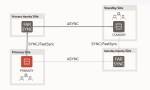
Introduction FastSync and Far Sync seem to be very similar terms, especially in the spoken language. In my conversations, I have seen these terms being mixed up and even questions about using one OR the other. Indeed, FastSync and Far Sync are two different things that can be used independently or make perfect sense to…
How Oracle Active Data Guard provides better Disaster Recovery than AWS RDS Read Replicas

Introduction Recently I have been asked whether AWS RDS for Oracle provides a solid disaster recovery solution using Read Replicas based on Oracle Active Data Guard. Oracle (Active) Data Guard is undoubtedly Oracle’s most comprehensive data protection and disaster recovery solution for Oracle Database. However, whenever I read or hear “RDS”, the next word that…
Fast-Start Failover in Data Guard Environments on Oracle Cloud

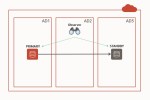
Introduction Oracle Data Guard and Active Data Guard ensure high availability and disaster recovery during maintenance operations and in case of outages. Recovery Point Objective (RPO) of zero (zero data loss) can be achieved by setting up SYNC or FASTSYNC replication, even at any distance, using Far Sync without compromising performance. Recovery Time Objective (RTO)…
Creating PDBs in Data Guard Environments while using OCI Vault for TDE Key Management

Introduction Oracle Databases on Oracle Cloud use the Multitenant Architecture and are encrypted with TDE by default. Creating new PDBs in Data Guard environments while using a local wallet for TDE master encryption keys requires some additional steps to copy the wallet file and recover the PDB on standby. We discussed these approaches in previous…
How to move your Exadata Cloud Service Databases to X9M with Zero Downtime

Introduction Oracle constantly introduces new Exadata Platforms providing higher performance, lower latency, extended storage, and optimized software and networking. The Exadata X9M generation is available on-premises, cloud@customer, and public cloud. AND, it comes at the same price as the previous generation!!! It is as simple as this: higher performance + same price = reduced cost…
How to measure Network Latency for Oracle Data Guard Replication

Introduction Oracle Data Guard replicates data from the primary to one or multiple standby databases for high availability and disaster recovery. The decision to transfer the redo synchronously or asynchronously depends on your RTO and RPO. Synchronous redo transport provides zero data loss and lower recovery time, but your application needs to wait until the…
How to patch Data Guard Environments on Oracle Cloud with Minimal Downtime

Introduction Oracle Data Guard provides synchronous data replication to standby databases to ensure zero data loss in case of a disaster. In addition, the standby database can be used to offload RMAN backups, serve read-only and read-mostly workloads, and ensure high availability for planned maintenance. This blog post provides the steps needed to patch Data…