Category: Database Migration

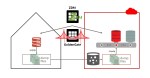
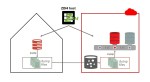
Achieve Minimal Downtime for your Exadata Cloud@Customer Migrations with Oracle ZDM and GoldenGate on Docker

Introduction For ZDM Logical Online migrations to Exadata Cloud@Customer you will be running Oracle GoldenGate on-premises instead of on the Marketplace image on Oracle Cloud. Oracle GoldenGate keeps your source and target databases in sync and enables you to achieve zero to negligible downtime for your Oracle database migrations across database versions and platforms. This…

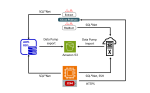
How to migrate to OracleDB for Azure using ZDM Physical Online Migration

Introduction OracleDB for Azure (or, Oracle Database Service for Azure) simplifies multicloud deployments by providing an Oracle-managed interconnect between your Azure and OCI accounts. Customers running their workloads on Azure can now keep the application on Azure and move the Database to Oracle Cloud to benefit from Cloud Automation, Exadata Service, Oracle RAC, and more.…

How to move your Exadata Cloud Service Databases to X9M with Zero Downtime

Introduction Oracle constantly introduces new Exadata Platforms providing higher performance, lower latency, extended storage, and optimized software and networking. The Exadata X9M generation is available on-premises, cloud@customer, and public cloud. AND, it comes at the same price as the previous generation!!! It is as simple as this: higher performance + same price = reduced cost…

Zero Downtime Migration (ZDM) – Logical Online Migration to VM DB Systems

Introduction Configuring GoldenGate for database migrations might be complex and require deep knowledge and expertise in GoldenGate. Zero Downtime Migration (ZDM) requires only a response file with the needed parameters. It configures and runs everything for you automatically to achieve (near) zero downtime while migrating your Oracle database to Oracle Cloud. This blog post provides…

SYSDATE vs. CURRENT_DATE in Oracle Database

Introduction SYSDATE is a SQL function that returns the current date and time set for the operating system of the database server. CURRENT_DATE returns the current date in the session time zone. The same story applies to SYSTIMESTAMP and CURRENT_TIMESTAMP. When database and application servers are set to the same time zone, both functions will return the…