Tag: Data Guard

Understanding Redo Transport in Oracle Data Guard

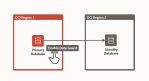
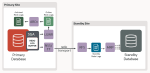
Introduction If you are working with Oracle Data Guard, you have probably wondered what actually gets transmitted between your primary and standby databases. Is it the redo data, the redo log files, or the entire data blocks themselves? It is an important distinction, and understanding it can help you troubleshoot performance issues, optimize your network…
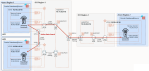
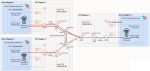
Implement disaster recovery with local and regional standbys on Oracle Database@Azure

Introduction When building applications, it is essential to ensure business continuity by establishing high availability and disaster recovery mechanisms. This requires implementing a resilient disaster recovery framework capable of swiftly restoring operations in the event of an outage. For years, organizations have relied on Oracle Exadata Database Service, Oracle’s premier disaster recovery technologies, to support mission-critical…

Implement disaster recovery with multiple regional standbys on Oracle Database@Azure

Introduction Ensuring uninterrupted business continuity is critical to success when designing applications. Achieving this requires a robust disaster recovery strategy designed to quickly restore functionality in case of disruptions. For years, businesses have trusted Oracle Exadata Database Service with Oracle’s premier disaster recovery technologies to power critical applications, both on-premises and within Oracle Cloud Infrastructure (OCI).…

Simplified Disaster Recovery with Data Guard in Oracle Cloud

Before we begin, huge kudos to my colleague Sebastian Solbach for working on this blog post. Introduction Mission-critical applications rely on 24/7 availability to maintain business operations. The database is the most critical component in every software architecture; therefore, it is compelling to implement a strategy that maximizes data availability, reliability, and protection. Oracle Data…

Oracle MAA Summit in Düsseldorf on May 14, 2024

The Oracle Maximum Availability Architecture (MAA) product management team invites you to attend its next MAA Summit for informative and interactive sessions on Oracle Database high availability and disaster recovery, Oracle Vector Search, and Exadata MAA. Learn about what’s new and provide your feedback directly to Oracle product management. When and Where Tuesday, May 14,…

A Java Example for Oracle Application Continuity with Oracle Active Data Guard

Introduction Oracle Application Continuity hides database interruptions from end-users and applications. A simple test using SQL*Plus was discussed in this blog post. However, SQL*Plus is usually not your real application that will be used in production. Also, SQL*Plus is not a pooled application, and it’s recommended to use Connection Pools for Application Continuity. This blog…

How to create Oracle Database Services for High Availability

Introduction To use High Availability features like Fast Application Notification (FAN), Draining, and Application Continuity, you need to create a custom database service and set the high availability attributes accordingly. This is not possible when using the default database service, which is the service with the same name as the PDB. Additionally, custom database services…