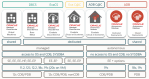
Part 3/10: Oracle Database Migration Considerations

In this part, we will discuss the database characteristics and factors that affect choosing a migration method. Some of the migration methods apply only if specific characteristics of the source and destination database match or are compatible. Logical vs. Physical Migrations Logical migration means extracting the database objects and data from the source database and creating…

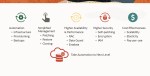
Part 2/10: Introduction to Oracle Database Cloud Services

In this part, we will talk about the different database service offerings and their characteristics in Oracle cloud to help you determine the right service to move to according to your needs and requirements. There is no THE ORACLE DATABASE in the cloud, but many different service offerings that primarily differ in their level of…

Scalability and Elasticity in Oracle Cloud Infrastructure

Scalability and elasticity are fundamental elements of cloud computing. They enable to allocate as many resources as needed for the system to fulfill the workload requirements. An essential benefit of the cloud is the ability to scale up and down on demand immediately while using a pay-per-use model and get the best performance at the…

Budget and Cost Monitoring in Oracle Cloud Infrastructure

It is critical for organizations to have an overview of their spending, track the consumption, and get notifications if the budget or the forecast exceeds the budget amount to be spent. In this blog post we will discuss how to set up, monitor, and track your spending in Oracle Cloud Infrastructure using cost-tracking tags, cost…

Connect to Oracle (Autonomous) Database using Secure External Password Store (SEPS)

Scripts, batch jobs, and application code need to provide a database username and password to connect to the database. Using wallets risk is reduced because such passwords are no longer exposed in plain text, and password management policies are more easily enforced without changing application code whenever user names or passwords change. Connect using the connect…

Networking in Oracle Cloud Infrastructure – Advanced Topics

Oracle Cloud Infrastructure provides highly customizable Virtual Cloud Networks (VCN) and connectivity services offering performance, isolation, security, and high availability. In this blog post are going to discuss following topics: Local Peering to manage resources in different VCNs (across tenancies). Remote Peering to implement disaster recovery across regions. Private & Public Peering to implement hybrid cloud solutions. Transit Routing to…

High Availability & Disaster Recovery in Oracle Cloud Infrastructure

Critical applications have the requirement to run 24/7 and tolerate hardware and software failure and even complete data center outages. Oracle Cloud Infrastructure with its’ regions, Availability Domains (AD), and Fault Domains (FD) provides the needed building blocks to design and run high availability and disaster recovery architectures for your applications and databases. A region…

Security Features in Oracle Autonomous Database

Security is a primary concern for enterprise customers and one of the most discussed topics when it comes to move to the cloud. The same questions are being raised again and again: Is the cloud secure? Is my data safe their? Does it meet my compliance requirements? Before starting with the technical security features that…